
Capability 01
Strategy & Consulting
Before anything is designed, the right question has to be asked.
Overview
Most ambitious projects do not fail on ideas. They fail on unclear scope, untested assumptions and a supply chain that was never properly structured. AQUASEE works with clients at the front of that curve — where a decision still has room to be made well.
We begin by reading the brief critically: what is the client actually trying to build, who is it for, what has to be true commercially, and what constraints will decide the outcome. From there we shape a project that design, engineering and procurement can all act on.
Our consulting is deliberately hands-on. Strategy work is not handed over as a deck and left behind — it stays connected to design development and delivery, because that is where assumptions either hold or fail.
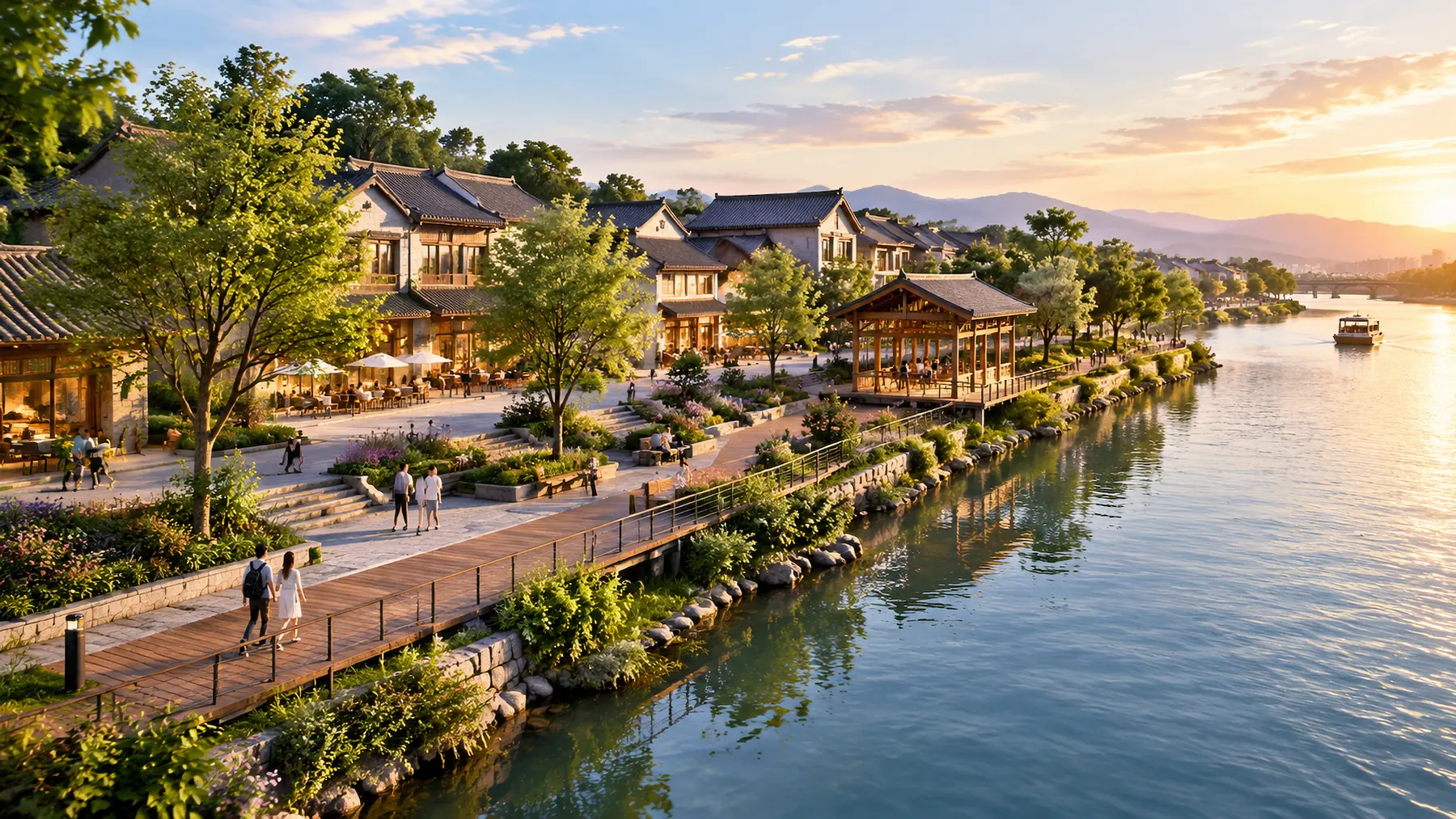
Where AI assists us
Where AI earns its place in this work.
Direction generation
From a brief we generate a wide set of directions and scenarios, so decisions are made between options rather than against a single guess.
Early visual option testing
Contextual imagery assembled while a direction is still cheap to change, so a direction can be judged rather than described.
Assumption stress-testing
Scale, programme and cost assumptions checked against a site and a budget while the options are still open.
AI does not replace the engineer, the specification or the factory. It widens the range of directions we can put in front of you.
What We Do
The specific activities that make up this part of the engagement.
Each one is a defined piece of work with a named output — not a phase of vague effort.
- 01
Brief & project definition
Transcribing a vision into a structured brief with clear objectives, audiences, constraints and decision points.
- 02
Feasibility & site readiness
Reviewing site conditions, local regulation, logistics and infrastructure against the intended scope.
- 03
Concept framing
Establishing the organising idea, experience narrative and priority hierarchy for a project before detailed design begins.
- 04
Programme & phasing
Sequencing a programme so that early decisions, approvals and long-lead items are resolved without blocking momentum.
- 05
Scope & cost planning
Building a cost plan and scope matrix that stays usable as the design evolves, with clear assumptions and contingency.
- 06
Partner strategy
Selecting and briefing the right design, engineering and manufacturing partners, and aligning them to a single brief.
Deliverables
What you receive.
- Structured project brief
- Feasibility and risk register
- Concept framework and experience narrative
- Programme and phasing plan
- Scope, cost plan and assumption log
- Partner recommendation and briefing package
Engagement
How the work runs.
- 01DiagnoseInterrogate the brief, the site and the commercial reality behind it.
- 02DefineConvert intent into an agreed scope, framework and set of constraints.
- 03PlanSequence the programme, cost it, and select the delivery route.
- 04AlignBrief partners, resolve conflicts early and hold the concept through to delivery.
This is a good fit if
- Developers planning a first international project
- Design firms needing a delivery partner for an unusual or custom element
- Operators commissioning an experience rather than a product
- Teams whose scope has grown faster than their plan